Etsy just drew a hard line on AI. For parents running a shop from the kitchen table, that line is good news if you know where it sits. Here is what changed, what is still allowed, and the simple split I use to decide where AI belongs.
By Warren Schuitema, AI Systems Consultant, Matchless Marketing / Matchless AI
Published: October 27, 2026 | Last Updated: October 2026
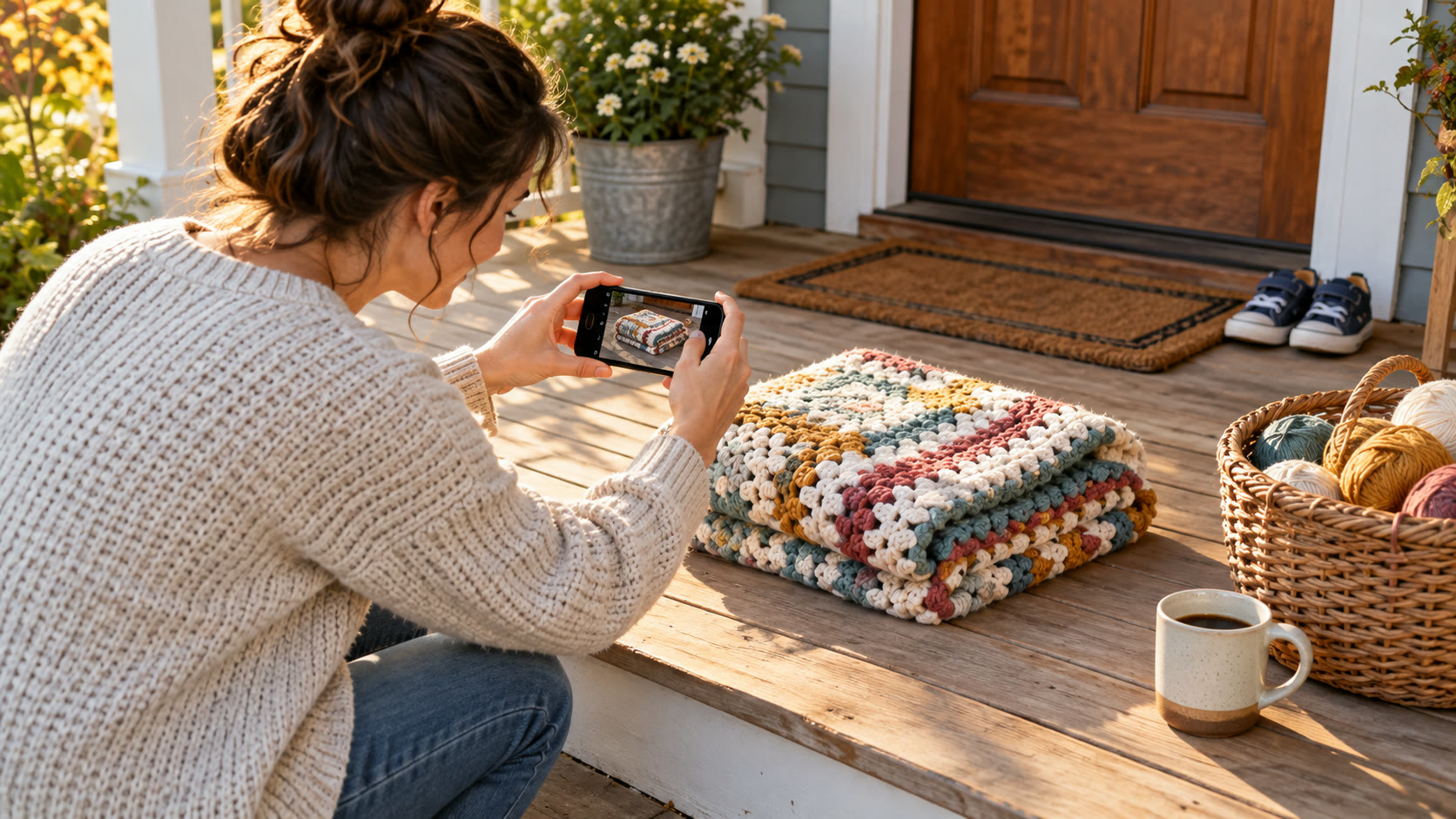
Somewhere tonight, a mom is finishing a crochet blanket after the kids go to bed.
She wrote the pattern herself. She tested it twice. She took the photo on the porch in morning light because that is when the yarn looks right.
And for the last year, her listing has been sitting next to patterns no human ever tested, with pictures of blankets no human ever made.
On October 22, 2026, Etsy changed the rules on that. James Ossman, Etsy's Vice President of Customer Operations, posted an update in the Seller Handbook called "Important updates to AI use on Etsy." The short version: every listing now needs at least one unedited photo of the real item against a real background. AI-written patterns, recipes, and instructions are out. Listings made by bots with no human involvement are out too.
So, can you still use AI to sell on Etsy? Yes. AI art is still allowed if you play a clear creative role and say how it was made. You can still use AI to clean up your extra photos, and to help with the work behind the shop. What you cannot do anymore is let AI stand in for the product, the proof, or the person. That is the line. Stay on the right side of it, and these rules work for you.
Key Takeaways
- Every Etsy listing now needs at least one unedited photo of the actual item against a real background, with some exceptions by product type.
- AI-generated patterns, recipes, and instructions are no longer allowed, and listings for them must show a real result you made.
- AI art is still allowed when you play a clear creative role and disclose it, but you cannot call it handmade.
- Bot-made listings with no human involvement can get your listings removed and possibly your whole shop.
- The simple test: let AI help in the back office, and keep your own hands on the product and the proof.
Etsy Says Buyers Stopped Trusting What They See
Etsy said it plainly in its announcement: AI is "threatening that trust."
Here is the part that should make every seller sit up. Etsy says many active buyers report they cannot tell which items involve AI-generated content. And that confusion is now a "top-three barrier to shopping more often on Etsy."
One of the top three reasons buyers hold back is that they do not know what is real.
Sellers felt it first. Value Added Resource, which covers marketplace sellers, reported that crafters raised this at a November 2025 Ask Me Anything with Etsy CEO Kruti Patel Goyal. Their complaint was simple. AI crochet patterns were being sold with pictures of items the pattern could not actually make. A buyer spends money, buys yarn, spends hours of her evening, and ends up with a mess.
That hits hard when your customer is another busy parent. Her time is the most expensive thing she owns.
You see this with almost every new tool. A few people use it to cut corners, and everyone pays for it, including the people who did the work right. Etsy is now trying to make honest sellers easy to spot again.
The Numbers Behind the Shop Next Door
Etsy is big. In its full-year 2025 results, released February 19, 2026, Etsy reported 5.6 million active sellers and 86.5 million active buyers on its marketplace. Shoppers spent about $10.5 billion on Etsy marketplace goods in 2025.
Etsy sellers are a lot like my readers. The most recent global seller census Etsy published, released in 2019 from a 2018 survey of 6,797 sellers, found that 87% of sellers were women, 97% ran their business from home, and 80% were businesses of one. That data is older, so read it as a picture of who Etsy has long served. And the picture is clear. Etsy is full of people running a business from the same house where the homework gets done.
Small businesses are already using AI. The U.S. Chamber of Commerce's 2025 "Empowering Small Business" report found that 58% of small businesses use generative AI, up from 40% in 2024. So this is not some far-off problem. Most of your competition already has AI open in another tab.
And buyers care a lot about real pictures. In Getty Images' "Building Trust in the Age of AI" report, released in April 2024 and based on surveys across 25 countries, 98% of consumers agreed that authentic images and videos are pivotal to trust. Almost 90% wanted to know if an image was made with AI. And 76% agreed with this line: "It's getting to the point where I can't tell if an image is real."
Put those facts side by side. Sellers working from home, many using AI, selling to buyers who want to trust the picture and often cannot. Etsy's new rules sit right where those lines cross.
Here Is Exactly What Changed on October 22
Here are the rules as Etsy's Seller Handbook update and early reports from Value Added Resource and EcomCrew describe them.
1. One real, unedited photo. Your listing "must include at least one unedited photo of the actual item against a real background." Value Added Resource reports that even simple fixes like cropping, straightening, or brightening count as edits on that one photo. Your other photos can still be edited, including with AI, for lighting, color, cropping, resizing, or a new background. But every photo must show what the buyer will actually get. No hiding flaws. No changing the color or the design.
2. Patterns, recipes, and instructions must be yours. Etsy now bans AI-generated "functional guides." That covers knitting, crochet, and sewing patterns, recipes, woodworking plans, and other step-by-step guides. The instructions must be your own work. And the listing must show a real result made from them. An AI picture of the finished blanket cannot be the only picture.
3. No bot listings. Listings made by bots without any human involvement are not allowed. Etsy says those listings will be removed and the shop may be removed too. Value Added Resource notes that Etsy has not said exactly how much human involvement is enough.
4. You may owe the refund. If a listing breaks the image rules and a buyer opens a case because the item is "materially different," you may be responsible for refunding the buyer. Repeat problems can lead to action "up to and including shop removal."
5. AI art stays, with honesty. Etsy still allows AI-generated art when the seller plays a clear creative role and is open about the process. You must disclose when an item was made with AI. You "cannot misrepresent AI-generated work as handmade or entirely" your own creation.
There are exceptions by product type. Print-on-demand sellers can keep using authorized stock mockups when a partner prints their original design on a standard shirt or mug. Most digital downloads need a preview or excerpt of what the buyer gets. Digital items with nothing to look at, like an audio file, can use representative images, including AI images, if they do not mislead. If you make custom or made-to-order items, show real photos of finished work you have made before.
What happens next. Etsy's listing form will flag AI-generated images as you add them, and later on existing listings. Buyers can now report listings that may use misleading AI images. Etsy says those reports will not trigger immediate enforcement at first.
One deadline to watch. Etsy's update also points sellers to a California law, SB 1050, that takes effect January 1, 2027. Listing images or videos that prominently feature an AI-generated "synthetic performer," meaning a fake person who looks real, may need a clear disclosure. Etsy tells sellers to check with their own legal counsel. I am not a lawyer, so I will say the same thing. If your listings use AI models that look like real people, ask one.
Etsy did not announce a deadline for fixing old listings. It says they need to be updated. I would not wait for one.
AI Can Run the Back Office. Your Hands Have to Touch the Product.
Here is the one idea I want you to keep.
I call it the Maker's Line. On one side of the line is everything the buyer pays for and relies on: the item, the instructions, and the proof that it works. On the other side is all the work that keeps the shop running: planning, drafting, organizing, answering, tracking.
AI belongs on the back-office side. You belong on the product side. Every time.
Look at Etsy's new rules through that lens and they read like the Maker's Line written into policy.
- The unedited photo? That is proof the item is real. Product side. Yours.
- The pattern or recipe? That is the thing the buyer relies on. Product side. Yours.
- The bot listing? That is a shop with no human on the product side at all. Gone.
- AI art with disclosure? That works because you are honest about which side the AI was on.
I use AI everywhere it fits in my business. But I do not let it have the final word on something a customer depends on. And that is exactly what Etsy is asking of you now.
How I Keep a Human on Every Item That Matters
I learned this building my own systems, at work and at home.
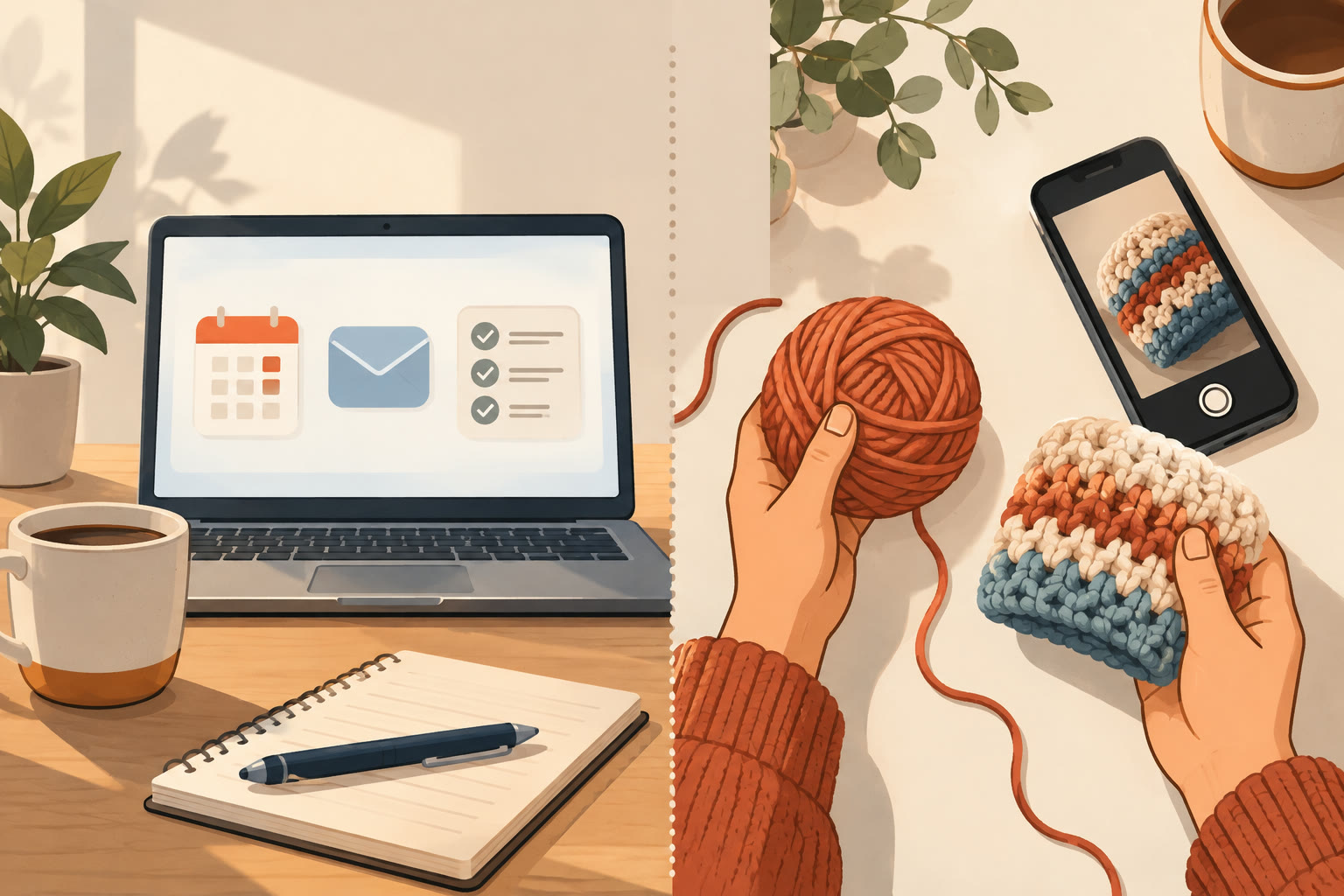
My AI agents do the drafts. I do the final yes. Matchless runs on a workforce of AI agents. They handle research, first drafts, notes, and content prep. But they work draft-first. Nothing sends, posts, invoices, books, buys, signs, or spends until I say yes. I am the only approval gate.
That is the same rule Etsy just made for listings. AI can get a listing most of the way there. A real person has to look at each one and own it. A tool cranking out listings you never read is exactly what Etsy now bans. My rule: if my name goes on it, I see it first.
On a plant floor, you check the real part. I spent 16 years in manufacturing and supply chain. Every plant floor teaches the same lesson. Nobody approves a production run from the drawing alone. You build a real part, you put it in your hands, and you check it. The drawing shows what should happen. The part shows what did.
An AI picture of a finished blanket is the drawing. Etsy now wants the part. Every seller who came from a trade already knows why.
At home, the test is whether it works on a real Tuesday. I built a Weekly Meal Planner for our family. It replaced HelloFresh and ended our Sunday planning spiral. AI helps with the planning. But the planner only earned its place because it holds up in a real kitchen on a real weeknight. That is the standard a recipe on Etsy has to meet too. A recipe nobody cooked is a guess with a price tag.
Here is a quick example. Say you sell crochet patterns. AI can help you sort customer questions, draft a care card, or brainstorm names for your next patterns. All back office. But the pattern itself? You write it. You stitch it. You photograph the finished piece on your porch, no filter. The AI never touches the product side.
Where AI Still Helps Your Etsy Shop
So what is left for AI? Plenty. Here is where I would still use it. A human reads and owns every piece before it goes live.
- Planning your week. Which listings to update, what to make, when to ship. This never touches the buyer.
- Drafting words you then check. A first pass of a description or a thank-you note. You fix it until it is true. If it says "soft cotton," it had better be soft cotton.
- Cleaning up your extra photos. Beyond the one unedited photo, edits for lighting, color, cropping, and backgrounds are fine if the photos stay accurate.
- Sorting the inbox. AI can draft replies. You read every one before it goes out.
- AI art, done honestly. Play a clear creative role, disclose it, and never call it handmade.
Thinking about letting an AI tool log into your shop to do some of this? Read my post on whether you should give an AI agent the passwords to your business accounts first. Keep the big moves behind your own approval.
7 Steps to Get Your Etsy Shop Ready This Week
- Sort your listings into three piles tonight. Pile one: listings with a real, unedited photo already. Pile two: listings with only edited or AI-made photos. Pile three: patterns, recipes, or guides. Pile two and pile three are your to-do list.
- Shoot one honest photo per item. For pile two, take one plain photo of the actual item against a real background. No cropping, no brightening. Etsy suggests making your first photo the clearest, most realistic view, since buyers see it first.
- Check every guide you sell. For pile three, ask one question: did I write and test these instructions myself? If AI wrote them, take the listing down. If you wrote them, add a real photo of something you made from them.
- Turn off anything that lists for you. If any tool creates listings without you reviewing each one, stop it. Etsy bans bot-made listings with no human involvement, and the penalty can reach your whole shop.
- Add an honest line about AI. If an item was made with AI, say so clearly in the listing. If you used AI to edit extra photos, Etsy suggests noting that too. A short, plain sentence is enough.
- Ask a lawyer about AI people in your photos. If any listing image or video features an AI-made person who looks real and you sell to California buyers, ask your own legal counsel about SB 1050 before January 1, 2027.
- Write your own Maker's Line on one sticky note. Left side: jobs AI can help with. Right side: jobs only your hands do. After two weeks, ask the only question that matters. Did this give you back Time, Money, or Energy? If you stopped worrying about a takedown, that is Energy back.
Frequently Asked Questions
Does Etsy allow AI-generated products?
Yes, with limits. Etsy still allows AI-generated art when the seller plays a clear creative role and discloses how it was made. You cannot present AI work as handmade or entirely your own. AI-generated patterns, recipes, and instructions are no longer allowed. Bot-made listings with no human involvement are banned and can lead to shop removal.
What is Etsy's unedited photo rule?
Since October 22, 2026, each Etsy listing must include at least one unedited photo of the actual item against a real background. That photo cannot be cropped, brightened, or changed with AI. Your other photos can be edited for lighting, color, cropping, or backgrounds, as long as they still show exactly what the buyer receives.
Can I sell crochet patterns or recipes I wrote with AI on Etsy?
No. Etsy now requires patterns, recipes, and other instructions to be your own work, not generated by AI. Listings must also show a real result made from the instructions, such as a photo of the finished blanket or the cooked dish. An AI-made picture cannot be the only image of the finished result.
Do print-on-demand and digital download sellers need an unedited photo?
Not always. Print-on-demand sellers can use authorized stock mockups when a partner prints their original design on a standard item like a shirt or mug. Most digital downloads need a preview or excerpt instead. Items with nothing visual, like audio files, can use representative images, including AI images, if they do not mislead buyers.
Is there a deadline to update my old Etsy listings?
Etsy has not announced a deadline or grace period. Its update says listings that do not meet the new image rules need to be updated. Etsy's listing tool will flag AI images over time, and buyers can now report misleading AI images. Fix your listings now rather than waiting for a flag or a refund case.
Keep Your Hands on What the Buyer Holds
Go back to that mom on the porch with her crochet blanket.
For a year, she competed with patterns no one tested and pictures no one took. Starting now, her honest photo and her tested pattern are her edge.
That is the real story inside these new rules. Keep using AI. Just keep it on the right side of the Maker's Line. Let it plan, draft, sort, and suggest. Then you make the thing, you test the thing, and you take the picture of the thing.
Do that, and you spend less time worrying about takedowns and more time making what people came to Etsy to buy.
That is the test I run on every system I build. Does it give you back Time, Money, or Energy? This one gives back all three, as long as AI stays in the back office and you stay at the workbench.
Let the machine do the paperwork. Let your hands do the proving.
That is A Better Way to use AI in a handmade business.
Keep Learning
- Will AI Shopping Agents Send Customers to Your Small Business, or Straight to Amazon? What AI shopping agents look for in a listing, and how a small shop gets picked.
- Should You Give an AI Agent the Passwords to Your Business Accounts? How to decide what an AI agent can reach, and what should stay behind your approval.
- Is Google's New Gemini Business Hub Worth Using for Your Small Business? What Google's new small business tools can handle in the back office.
- Should You Let a Proactive AI Agent Like Claude Duet Decide What Needs Your Attention? Simple rules for any AI that wants to look through your accounts and interrupt your day.
- Can ChatGPT Make Your Presentations Now? What ChatGPT Slides Means for Small Business Owners What ChatGPT's slides feature can and cannot do for owners.
About the Author
Warren Schuitema is an AI Systems Consultant with Matchless Marketing and Matchless AI. He spent 16 years in manufacturing and supply chain, where he learned that nobody signs off on a product from the drawing alone. You check the real part. He runs his business day to day with a workforce of AI agents that draft first and wait for his approval before anything sends, spends, or signs. At home, his Weekly Meal Planner replaced HelloFresh and his Digital Wall Calendar replaced a $50 a month subscription. He helps small business owners and parent entrepreneurs build practical AI systems that give back Time, Money, or Energy, and he is a partner in the Goal Achievers Summit.